
ABOUT JOE
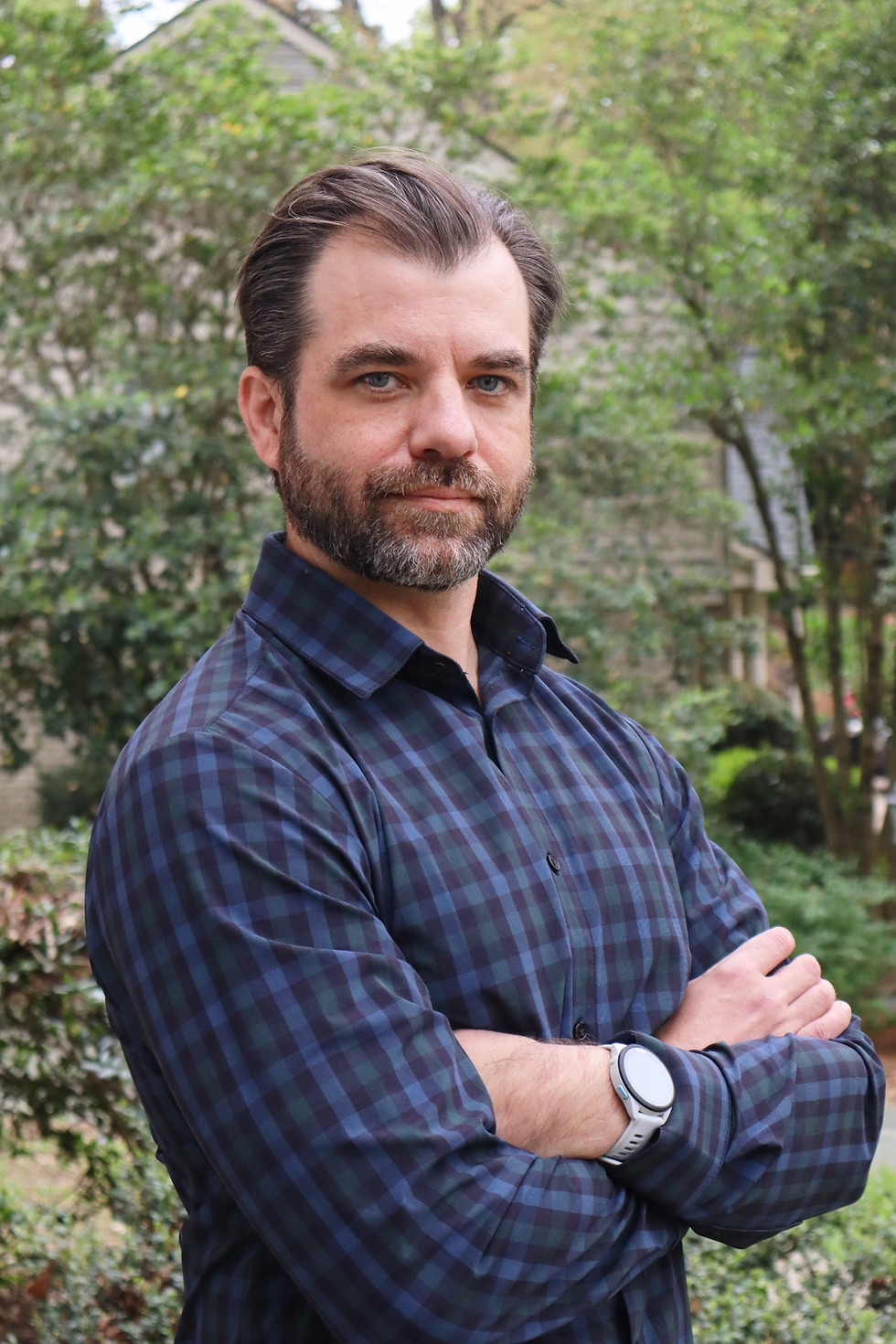
Founder of Watchfire Endeavors. 15 years owning and operating businesses. 20+ years of contemplative practice. One body of work.
Joe Bennett is the founder of Watchfire Endeavors. He works with owners on the business they are building and the person they are becoming, and treats those as one body of work. The story below is how he came to that work.

The Operating Life
The working life has stayed in direct contact with the real: making and moving things, paying people, being responsible for outcomes.
Joe started in construction in 2006, after returning from Korea. He spent the next several years inside the work, learning what running a business actually looks like from the ground up rather than from a deck. In 2011 he bought a franchise in the InXpress logistics network. The system was on a path that took it from roughly $30 million in revenue to $300 million over the years he was inside it. Joe was not a top-revenue franchisee, but he built a business to fit and support the life he wanted. InXpress selected and paid him to train new franchisees and appointed him to the Brand Development Council, the franchisee group that worked with corporate leadership on strategic direction.
He implemented EOS in his franchise in 2013, before InXpress itself adopted the framework at the corporate level. He has been helping other operators install operating systems in their own businesses since 2014.
He co-owns and advises UFC Raleigh, a concrete coatings business in the Triangle. Still inside the operating life, still doing the work in the world.
The years inside the businesses are where everything else got tested. Contact with the real is the common thread, and it is what makes the integrative work possible, because what is being integrated is not theory.
The Path
The path began in 2002, in a lecture hall at UNC Chapel Hill, listening to a talk by August Turak. Joe was twenty. Turak had spent the previous thirty years inside a working integration of business and contemplative practice. He started as a serious student of Richard Rose, an American mystic called the Backwoods Buddha by those who knew him, spent years as a monastic guest at the Trappist monastery at Mepkin Abbey, and founded the Self Knowledge Symposium, a student organization that for over a decade had been telling young people on three North Carolina campuses that a life could be framed as a quest. It was the first time Joe had heard the proposition made plainly. He has been on that road since.
Regular practice began three years later, in 2005, in South Korea. After college, Joe packed two duffel bags. One of clothes. One of books, almost all of them pulled from the SKS reading list. He moved to a town outside Seoul with two hundred dollars in his pocket, taught English to support himself, and spent the rest of his time meditating, reading, and working out what he was going to do with his life. He learned to meditate from Buddhist monks at a temple in the north of the city. That year became the foundation everything since has built on.
In the years since, the practice has continued across several traditions. Centering Prayer, through Contemplative Outreach. The Gurdjieff Work. Kriya Yoga, through Self-Realization Fellowship. Each tradition has its own methods and its own language for what is essentially the same work. Joe has spent enough time in each to speak its language and to know what it does to a person who actually sits.
The cumulative hours run into the thousands. The shortest honest version of what they add up to: the work changes what a person is able to be present to. In a meeting. In a marriage. In a decision the business is asking the owner to make. That capacity is what Joe brings to every engagement.
F3
F3 is a free men's workout group that turns into leadership training the longer you stay. It started small in North Carolina and grew into a global network. For several years Joe served as the first Nantan in Raleigh, leading what was then one of the early regions of F3 Nation.
The work was free, weekly, and outdoors. The role meant holding a community of men through the formative stage of a regional network and helping plant new regions in cities across Eastern North Carolina and beyond, including New Orleans, St. Louis, and Wilmington. It was the first sustained leadership-development practice of his life. Most of what he now knows about decentralized leadership, building communities, holding them through difficulty, and reproducing what works in new places, started there.
The Name
A watchfire is the fire a night watch keeps. It marks the post, it lets the sentry see, and it tells the people inside the walls that someone is awake.
After a battle, the fires were built for a different reason. The fighting scattered men from their units, and nightfall left them alone on ground they did not know. So the camp built its watchfires high and kept them burning, and a soldier who was lost could walk toward the light until he was home. The fire did not go searching. It held its place, and that was enough.
There is also an old practice of retiring worn flags by fire. When a flag has served past its useful life, you do not throw it away. You burn it with respect, and you raise a new one.
All three are in the name. The work is keeping watch through the long stretch. It is a steady light for owners who have been in the fight a long time and are ready to find their way back to the rest of their lives. And it is knowing when something that once served you is done serving, and letting it go with honor.
Credentials
Joe holds an interdisciplinary Management and Society degree from the University of North Carolina at Chapel Hill, drawing across philosophy, religion, economics, sociology, and psychology. He is certified in executive coaching and as a BOS-UP implementer of business operating systems on the Ninety.io platform. The credentials belong on the page. The substance of the work is in the years that preceded them.
Why This Work
The work is what twenty years of practice and fifteen years of operating finally added up to. Anything else would have been incoherent.
The owners Joe works with carry an outsized share of the meaning and the dignity of work in this country. They have built something they can stand behind. They employ people they know by name. They make decisions that affect their towns. Most of them are doing it alone. The consciousness culture sells them vocabulary without ground. The achievement culture sells them more of what has stopped working. Neither one is what they actually need, and they know it. What they need doesn't show up on a spreadsheet, and they know that too.
The work is appropriate when an owner has reached the limit of the operating mode that got them here. Some arrive at that limit at thirty-two. Some arrive at fifty-five. The qualifier is feeling the limit, not the years.
Watchfire exists for those owners. The premise is simple. The interior, the operating life, the team, and the question of what the next stage is actually asking for belong in the same conversation. The right practitioner can hold the whole of what a person is, not a slice of it. What that makes possible, over time, is a life and a business that are no longer in negotiation with each other.
The combination of those years of practice, those years inside the businesses, and the operating-system work sits in a small number of practitioners. Most of the ones who also carry the contemplative depth work at the public-company and private-equity tier. Joe built Watchfire for the tier that is still fully invested in their own community.
Joe lives a few miles from where he grew up, with his wife Becca and their three young kids.